Supply chain communication failures create expensive problems. Missed shipments, incorrect invoicing, inventory discrepancies, and order processing delays all stem from disconnected business systems. These issues cost suppliers money, damage retailer relationships, and create operational chaos that spreads throughout the entire supply chain.
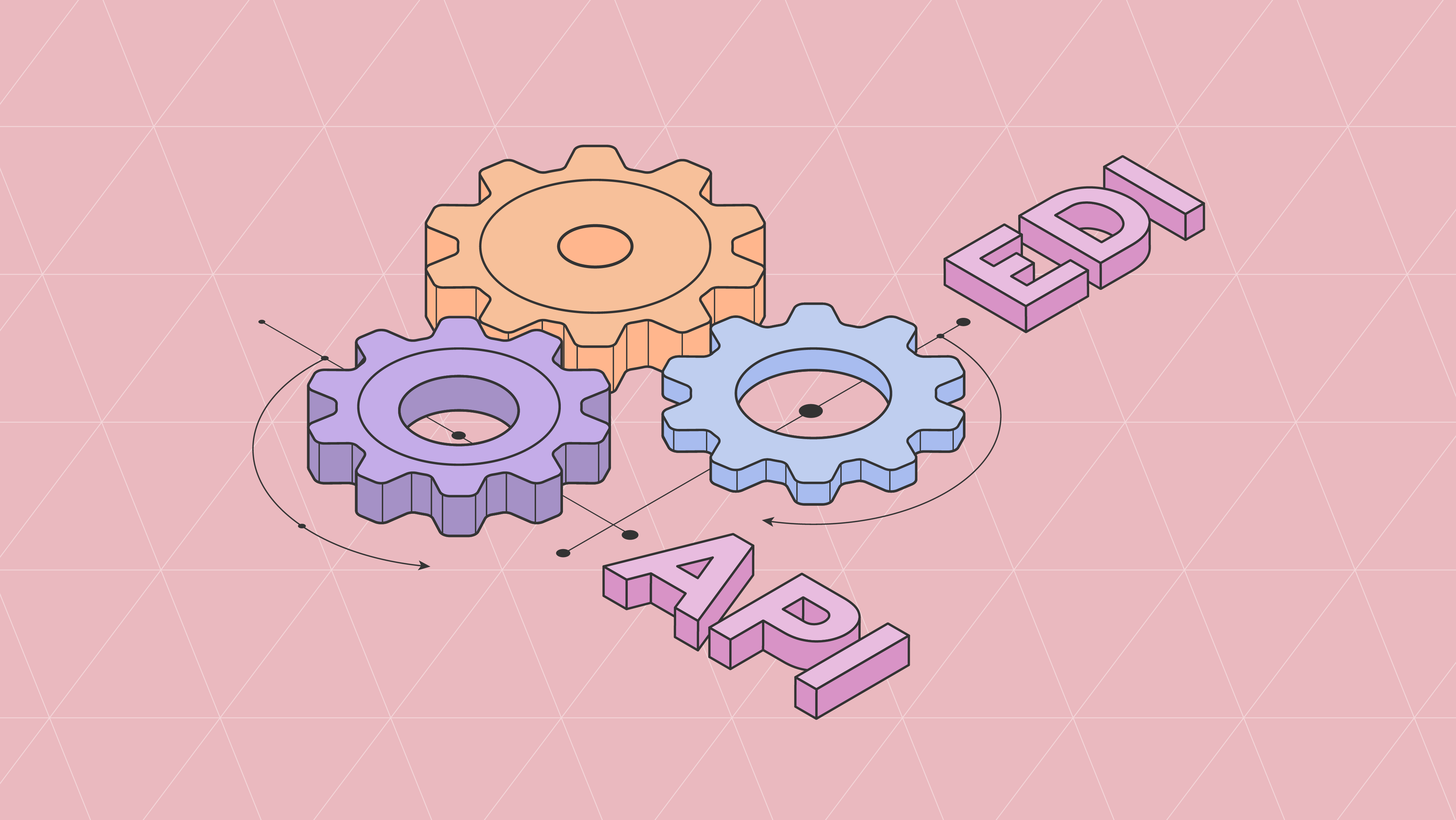
Modern CPG operations demand two complementary technologies working together: Electronic Data Interchange (EDI) and Application Programming Interfaces (APIs). The question isn't which technology to choose, but rather how to implement both without building an expensive internal IT department or managing complex technical infrastructure. Managed EDI services like Surpass solve this challenge by providing a single API connection that handles thousands of trading partner relationships simultaneously.
Understanding Electronic Data Interchange in Retail Supply Chains
Electronic Data Interchange automates business document exchange between trading partners without manual intervention. This standardized communication framework allows suppliers to send purchase order acknowledgments, advance ship notices, invoices, and inventory updates directly between computer systems.
The technology replaces manual document handling processes like email attachments, fax transmissions, and paper-based workflows. EDI transactions use standardized codes that function as universal business language. When Target sends an 850 purchase order to a supplier, the EDI standard ensures both systems interpret the order details identically, regardless of their internal software platforms.
This standardization prevents the communication breakdowns that plague traditional business processes. A warehouse management system error that delays inventory shipment by a week costs storage space, freight coordination expenses, and potential chargebacks from retailers. EDI eliminates these miscommunications by creating a consistent data format that all supply chain participants understand.
Core Advantages of EDI Technology
Protected data transmission represents EDI's primary strength. The technology employs encryption protocols and secure communication channels that safeguard sensitive business information during transmission. This security framework proves particularly valuable when exchanging financial data, proprietary product information, and confidential business terms with major retailers like Walmart or Kroger.
Automated document processing eliminates manual data entry across the entire order-to-cash cycle. Purchase orders flow directly into inventory systems, shipping confirmations generate automatically from warehouse management platforms, and invoicing occurs without human intervention. This automation reduces processing time from days to minutes while eliminating the transcription errors that create costly chargebacks.
Supply chain visibility improves dramatically when EDI connects all participants in real-time. Payment confirmations through 820 remittance advice, delivery tracking via carrier status updates, and product movement documentation create an information network that keeps every stakeholder informed about order status and inventory position.
Implementation Challenges Without Managed Services
Traditional EDI implementation requires specialized technical knowledge that most suppliers lack internally. Companies attempting self-managed EDI face significant obstacles including proprietary software licensing costs, ongoing maintenance requirements, and the need for dedicated IT staff who understand both EDI standards and specific retailer requirements.
Trading partner compatibility creates additional complexity. Amazon uses different EDI specifications than Costco, which differ from Best Buy requirements. Each retailer relationship demands custom mapping configurations, specific data formatting rules, and unique compliance requirements. Building and maintaining these individual connections without a managed service provider becomes prohibitively expensive and time-consuming.
Integration timelines stretch from weeks into months when suppliers handle EDI implementation internally. Each new retailer partnership requires extensive testing, mapping customization, and compliance verification before transactions can begin. These delays prevent suppliers from responding quickly to new business opportunities and limit growth potential in competitive markets.
API Technology in Supply Chain Operations
Application Programming Interfaces create real-time connections between web-based software systems. Rather than exchanging complete files like EDI, APIs function as continuous communication channels between applications. These digital bridges allow different software platforms to share data instantly without requiring users to manually transfer information between systems.
The technology works like a specialized translator positioned between incompatible computer systems. When a customer orders a product through an e-commerce website, an API converts that order into the format required by the warehouse management system. Product identifiers, quantities, shipping addresses, and delivery preferences all get translated automatically into the receiving system's data structure.
APIs eliminate the manual data synchronization that creates errors and delays in traditional business processes. Order management systems, inventory platforms, accounting software, and customer relationship databases all stay updated simultaneously through API connections. This real-time synchronization prevents the inventory discrepancies, order processing errors, and customer service issues that arise when systems operate independently.
Benefits of API Integration
Connected software ecosystems enable sophisticated business operations that would be impossible with manual processes. APIs allow enterprise resource planning systems to communicate with warehouse management platforms, which connect to transportation management software, which interface with retailer ordering portals. This interconnected network creates a responsive supply chain that adapts to changing conditions instantly.
Immediate data availability distinguishes APIs from batch-processing technologies. Rather than waiting for overnight file transfers or scheduled updates, APIs provide information the moment it becomes available. Inventory levels update instantly when products ship, order status changes reflect immediately in customer portals, and payment confirmations appear in accounting systems without delay.
Modern development practices make API implementation more accessible than legacy integration technologies. Software developers working with APIs use familiar web protocols and standard programming languages rather than specialized EDI knowledge. This accessibility reduces the technical barrier for companies wanting to connect their business systems to retailer platforms.
API Implementation Limitations
Inconsistent standards create integration challenges across different API providers. While EDI uses universal transaction codes, APIs vary significantly in authentication methods, data structures, endpoint configurations, and error handling approaches. A supplier connecting to multiple retailers through APIs must learn each retailer's unique technical requirements and maintain separate integrations for each partnership.
Technical expertise requirements remain substantial despite APIs using modern development tools. Building reliable API integrations demands software engineering skills, understanding of authentication protocols, experience with error handling, and ongoing maintenance capabilities. Small and mid-sized suppliers rarely have these technical resources available internally.
Security implementation becomes the supplier's responsibility when using APIs directly. Unlike managed EDI services that include security features as part of the standard offering, API connections require companies to implement their own authentication systems, data encryption, access controls, and compliance monitoring. This responsibility creates both technical challenges and potential liability concerns for suppliers without dedicated IT security teams.
Key Differences Between EDI and API Technologies
Both technologies enable automated business communication, but they approach the problem from different angles. Understanding these distinctions helps suppliers recognize why they need both working together rather than choosing one over the other.
Data Protection Approaches
EDI provides standardized security frameworks that have evolved over decades of enterprise use. The technology includes built-in encryption, authentication requirements, and transmission protocols specifically designed for protecting sensitive business documents. These security measures work consistently across all trading partner connections, creating a uniform protection level regardless of which retailer or distributor a supplier works with.
API security varies based on implementation choices and technical expertise. While APIs support strong security measures including OAuth authentication, SSL encryption, and token-based access controls, the actual security level depends entirely on how well these features are implemented. Companies using APIs directly bear full responsibility for security configuration, monitoring, and maintenance.
Partner Onboarding Processes
EDI integration traditionally involves complex setup procedures for each new trading partner relationship. Different retailers require specific transaction sets, unique mapping configurations, and customized compliance rules. When suppliers manage EDI internally, adding a new retailer like Home Depot or Lowe's can take months of technical work.
API onboarding follows more standardized processes in theory, with documented specifications allowing faster integration. However, this advantage disappears when suppliers must build and maintain separate API connections to dozens of different retailers. Each retailer's API still requires custom development work, testing, and ongoing maintenance.
Managed EDI services transform this onboarding challenge completely. Rather than building individual connections to each retailer, suppliers using platforms like Surpass connect once through a single API. The managed service provider handles all retailer-specific requirements, mapping configurations, and compliance rules behind the scenes. This approach reduces onboarding time from months to days while eliminating the technical burden on suppliers.
Cost Considerations
Traditional EDI implementation requires substantial upfront investment. Proprietary software licenses, dedicated hardware infrastructure, specialized staff hiring, and ongoing maintenance expenses create barriers for smaller suppliers trying to enter retail partnerships. These fixed costs remain high regardless of how many trading partners a supplier works with.
Direct API implementation appears more affordable initially since it uses existing web technologies rather than specialized EDI software. However, costs accumulate quickly when suppliers must build separate API integrations for each retailer. Development expenses, testing overhead, maintenance requirements, and staffing needs multiply with each new trading partner relationship.
Managed EDI services restructure these economics entirely. Instead of bearing the fixed costs of technical infrastructure and specialized staff, suppliers pay predictable monthly fees based on transaction volume. The managed service provider absorbs the costs of maintaining connections to thousands of retailers, distributing these expenses across their entire customer base. This cost structure makes enterprise-grade EDI capabilities accessible to suppliers of all sizes.
Usage Patterns Across Industries
EDI dominates structured business document exchange in retail supply chains. The technology handles purchase orders, shipping notices, invoices, payment remittances, and inventory updates for suppliers working with major retailers. Grocery distributors, consumer goods manufacturers, apparel brands, and specialty food producers all rely on EDI for core business processes.
APIs excel at connecting modern software applications that need real-time data exchange. E-commerce platforms, mobile applications, cloud-based services, and customer-facing websites all depend on API connections. While APIs can handle some business document exchange, they work best for interactive applications requiring immediate responses rather than batch transaction processing.
The Case for Integrated EDI and API Infrastructure
Supply chain success depends on having both technologies working together rather than choosing one or the other. EDI handles standardized business documents with major retailers while APIs enable real-time system integration and modern application development.
Retailers expect suppliers to support traditional EDI transactions for core business processes. Walmart, Target, Kroger, and other major retailers built their supply chain operations around EDI standards over decades. These companies aren't replacing EDI with APIs, they're maintaining EDI while adding API capabilities for new use cases.
Simultaneously, suppliers need API connections to integrate EDI capabilities into their existing business systems. A managed EDI service that requires manual file uploads and downloads doesn't solve the automation problem, it just shifts manual work from one system to another. True automation requires API connections between the EDI platform and the supplier's inventory management, accounting, and order processing systems.
This dual requirement creates a technical challenge for suppliers attempting to manage their own infrastructure. Building EDI connections to retailers while also developing API integrations for internal systems demands extensive technical resources and specialized expertise. Most suppliers lack the budget and staff to handle both requirements effectively.
Why Managed Services Outperform Internal Implementation
Attempting to build and maintain EDI and API infrastructure internally fails for most suppliers due to overwhelming technical complexity and ongoing resource requirements. The expertise needed to implement both technologies rarely exists within supplier organizations, and hiring specialized staff proves prohibitively expensive for all but the largest companies.
Managed EDI platforms solve this problem by providing both EDI connections to retailers and API access for supplier systems through a single integration point. Rather than building hundreds of individual retailer connections, suppliers using platforms like Surpass integrate once through a modern API. The managed service provider handles all retailer-specific EDI requirements, mapping configurations, compliance monitoring, and protocol updates behind the scenes.
This architecture eliminates the need for internal EDI expertise while providing the benefits of both technologies. Suppliers write code against a single, well-documented API instead of learning hundreds of different retailer specifications. When Amazon changes their EDI requirements or Costco updates their compliance rules, the managed service provider implements these changes transparently without requiring any work from suppliers.
Technical infrastructure maintenance shifts entirely to the managed service provider under this model. Server management, security updates, protocol changes, compliance monitoring, and disaster recovery all become the provider's responsibility. Suppliers avoid the ongoing technical overhead that makes internal EDI management so expensive while gaining access to enterprise-grade infrastructure that would cost millions to build independently.
The Single API Advantage
Modern managed EDI platforms provide one API connection that handles thousands of trading partner relationships simultaneously. This architecture transforms the economics and scalability of retail supply chain participation for suppliers of all sizes.
When a supplier integrates with Surpass, they build a single API connection to the platform. This one integration immediately provides access to every retailer in the Surpass network, from major chains like Walmart and Target to specialty retailers like Whole Foods and regional grocers. Adding new retailer relationships requires no additional technical work, just business setup and configuration through the platform interface.
This approach scales efficiently as suppliers grow their retail partnerships. A company selling to ten retailers today can expand to fifty or a hundred without additional development work or technical overhead. The marginal cost of each new retailer relationship approaches zero from a technical perspective, allowing suppliers to pursue new business opportunities without worrying about integration challenges.
The single API model also simplifies internal system integration. Suppliers connect their inventory management system, accounting platform, and order processing software to the Surpass API once. These internal integrations then work automatically with every retailer in the network. When inventory decreases, the update flows through Surpass to all connected retailers. When purchase orders arrive, they route directly into the supplier's order management system regardless of which retailer sent them.
Error handling and monitoring become centralized under this architecture. Rather than troubleshooting integration issues across dozens of different retailer connections, suppliers have one integration point to monitor and maintain. When problems occur, there's a single support team to contact and one technical interface to debug. This simplification reduces operational complexity and accelerates problem resolution.
Selecting the Right Infrastructure for Supply Chain Success
Suppliers evaluating their supply chain technology options face a choice between attempting internal implementation or using a managed service provider. The economics and technical requirements overwhelmingly favor managed services for all but the largest suppliers with extensive internal IT departments.
Traditional EDI implementation remains the standard for structured business document exchange with major retailers. These standardized transactions handle the core supply chain processes that retailers depend on for reliable operations. Any supplier working with major retailers must support EDI regardless of what additional technologies they implement.
However, supporting EDI through internal implementation creates unsustainable technical and financial burdens for most companies. The specialized expertise, ongoing maintenance requirements, and per-retailer integration costs make this approach practical only for very large suppliers with dedicated EDI teams. Even these companies increasingly move to managed services to reduce costs and improve scalability.
API integration capabilities distinguish modern managed EDI platforms from legacy solutions. Suppliers need API access to automate information flow between the EDI platform and their internal business systems. Without API connectivity, managed EDI services simply replace one manual process with another rather than achieving true automation.
The combination of EDI capabilities and API integration creates a complete automation solution. Managed platforms like Surpass provide both the EDI connections retailers require and the API access suppliers need for internal system integration. This dual capability eliminates the technical complexity that makes traditional EDI implementation so challenging while enabling the real-time automation that modern businesses demand.
Companies tired of managing complex EDI infrastructure internally should evaluate managed service providers offering comprehensive API-based integration. Surpass provides a single API connection that handles thousands of trading partner relationships while eliminating the need for internal EDI expertise, specialized staff, or complex technical infrastructure.
The supply chain landscape continues evolving toward tighter integration and faster response times. Suppliers who implement scalable, automated EDI and API infrastructure today position themselves for long-term success as retail partnerships grow and requirements become more demanding. Those attempting to manage technical complexity internally risk falling behind competitors who focus their resources on business growth rather than IT infrastructure maintenance.
More articles
Our platform is designed to empower businesses of all sizes to work smarter and achieve their goals with confidence.