When Automation Makes Financial Sense
The dozen-pallets-per-day threshold serves as a useful starting point for considering automated wrapping equipment, but the actual ROI calculation depends on several variables specific to your operation.
Manual wrapping typically takes 3-5 minutes per pallet when done properly, including the time to walk around the pallet multiple times and achieve adequate wrap coverage. An experienced warehouse worker wrapping 12 pallets daily spends roughly 45-60 minutes just on this task. At a fully-loaded labor rate of $25 per hour (including benefits and overhead), that represents approximately $20-25 in daily labor costs, or $5,000-6,500 annually for a single-shift operation.
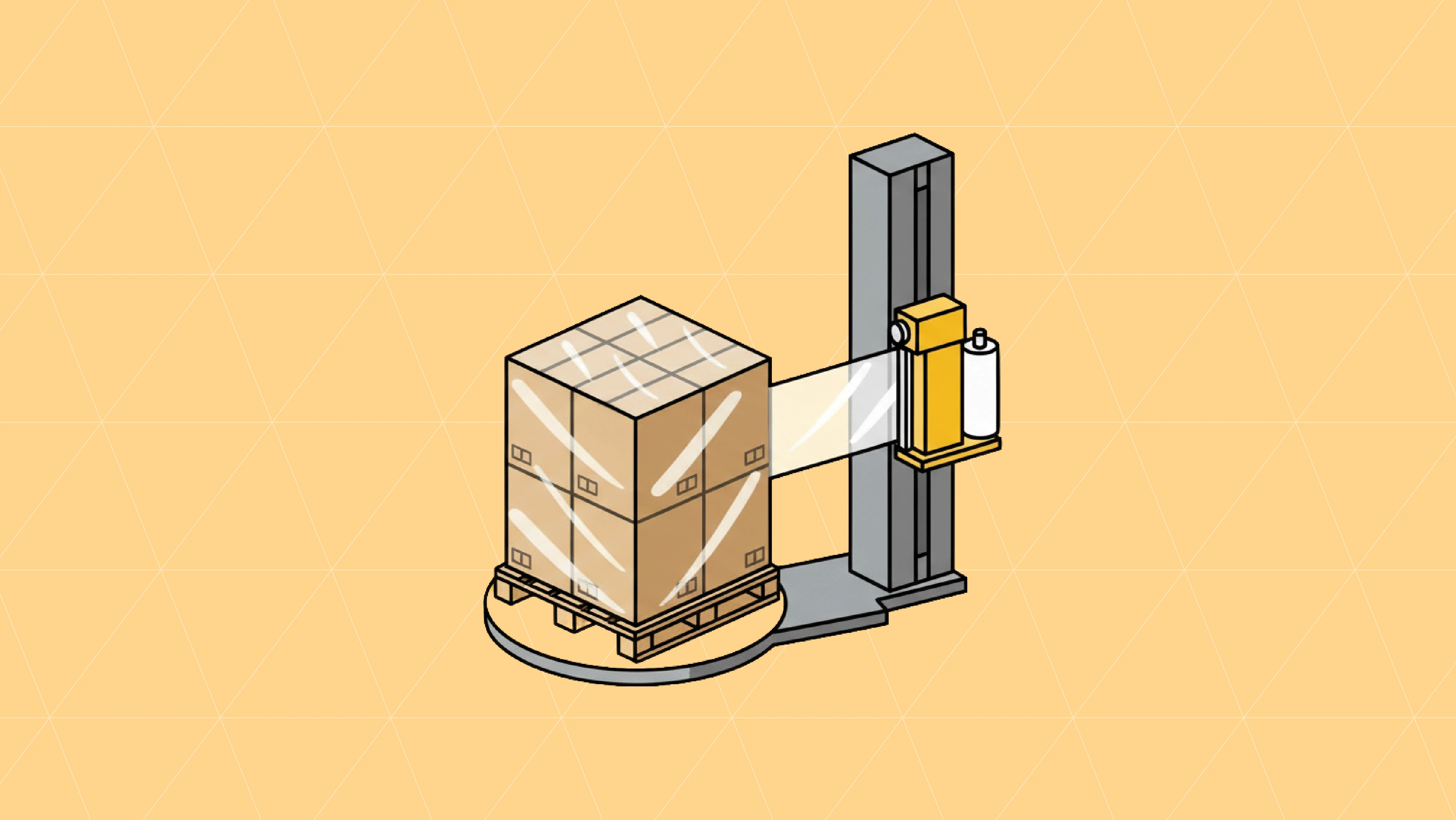
Semi-automatic turntable wrappers complete the same task in 60-90 seconds per pallet with consistent tension and coverage. This time reduction doesn't just save direct labor—it eliminates the physical strain that contributes to workplace injuries and allows your team to focus on higher-value tasks like quality control or order accuracy verification.
Hidden Costs of Manual Wrapping
Beyond direct labor, manual wrapping creates several less obvious expenses. Inconsistent wrap tension leads to load shifting during transit, increasing damage claims. A supplier experiencing just 2-3% damage rates on shipments might attribute losses to carrier handling when inadequate wrapping is actually the root cause.
Film waste represents another hidden cost. Manual operators often apply excessive film in some areas while leaving gaps in others, using 20-30% more material than necessary. For operations wrapping 250 pallets monthly, this waste can total $300-500 annually in excess film costs alone.
Worker fatigue also affects quality. The twelfth pallet wrapped manually in a shift rarely receives the same attention to detail as the first. Automated equipment maintains consistent quality regardless of volume or time of day.
Equipment Investment Ranges
Entry-level turntable stretch wrappers start around $3,000-5,000 for basic models suitable for light-duty applications. These machines work well for operations wrapping 10-30 pallets daily with relatively uniform load sizes.
Mid-range equipment ($8,000-15,000) offers programmable wrap patterns, variable speed control, and heavier-duty construction suitable for 30-60 pallets daily. These systems typically include photo-eye sensors that automatically adjust to different load heights, reducing operator intervention.
High-volume operations wrapping 60+ pallets daily often justify fully automatic rotary tower or ring wrappers ($20,000-50,000+) that require minimal operator involvement and integrate with conveyor systems for continuous throughput.
Calculating Your Specific ROI
To determine whether automated wrapping makes sense for your operation, calculate your current annual costs:
Labor: (pallets per day) × (minutes per pallet ÷ 60) × (hourly labor rate) × (working days per year)
Film waste: (current monthly film cost) × 0.25 × 12 months
Damage claims: (annual claims attributable to wrap failure)
Sum these costs and compare against equipment pricing. Most operations wrapping 12-15+ pallets daily see payback periods of 18-24 months on entry-level equipment, with ongoing savings thereafter.
Explore more Retail Calculators
Beyond Simple Payback
ROI calculations should also consider operational benefits that don't appear on balance sheets. Consistent wrapping improves your reputation with trading partners, particularly major retailers who track supplier performance metrics. A retailer like Walmart evaluating your compliance history considers receiving dock efficiency—properly wrapped pallets process faster, creating goodwill that can lead to expanded purchase orders or preferential treatment during capacity constraints.
Automated wrapping also provides documentation capabilities. Many modern systems include counters and cycle timers that help verify productivity and support ASN (EDI 856) accuracy by confirming pallet counts match shipping documentation.
For operations approaching the 12-pallet daily threshold, consider your growth trajectory. If you expect volume increases over the next 12-18 months, investing in wrapping equipment before you're overwhelmed makes more sense than waiting until manual processes become a bottleneck.
More articles
Our platform is designed to empower businesses of all sizes to work smarter and achieve their goals with confidence.