The supplier finance team sees them as separate line items. AP codes lumper fees to freight. The chargeback team codes compliance penalties to deductions. Two teams, two trackers, two write-off categories. The numbers add up to seven figures a year for mid-market CPG brands and nobody owns the root cause.
They are not separate problems. A bad shipment generates both at the same time, from the same operational failure. If you treat them separately, you fix neither.
This is the second piece in our retail compliance series. The first covered lumper fees end to end. This one connects them to the chargeback program and explains why the fix is upstream of both.
The mechanical difference
A lumper fee is a service charge for the labor to unload a trailer. The lumper bills the carrier or shipper for time spent moving freight, building pallets, counting cartons, or handling exceptions. It is reimbursable under most carrier contracts. It is disputable when the receipt is missing fields or the rate confirmation caps were exceeded.
A vendor compliance chargeback is a financial penalty assessed by the retailer for failing to meet their supplier program. Late shipments, wrong labels, missing ASN segments, pack-to-PO mismatches, GTIN errors, and a hundred other failure modes each carry their own code and dollar amount. Walmart's OTIF program, Target's vendor scorecard, UNFI's deduction codes, Kroger's compliance program all work the same way: retailer-defined rules, retailer-assessed penalties, retailer-controlled dispute portals.
The two charges hit different cost centers and look unrelated on a P&L. They aren't.
Where they overlap
Consider a single shipment with three defects: the ASN total carton count is off by four, two pallets exceed the height cap, and one SSCC label is unreadable. Here is what happens at the dock:
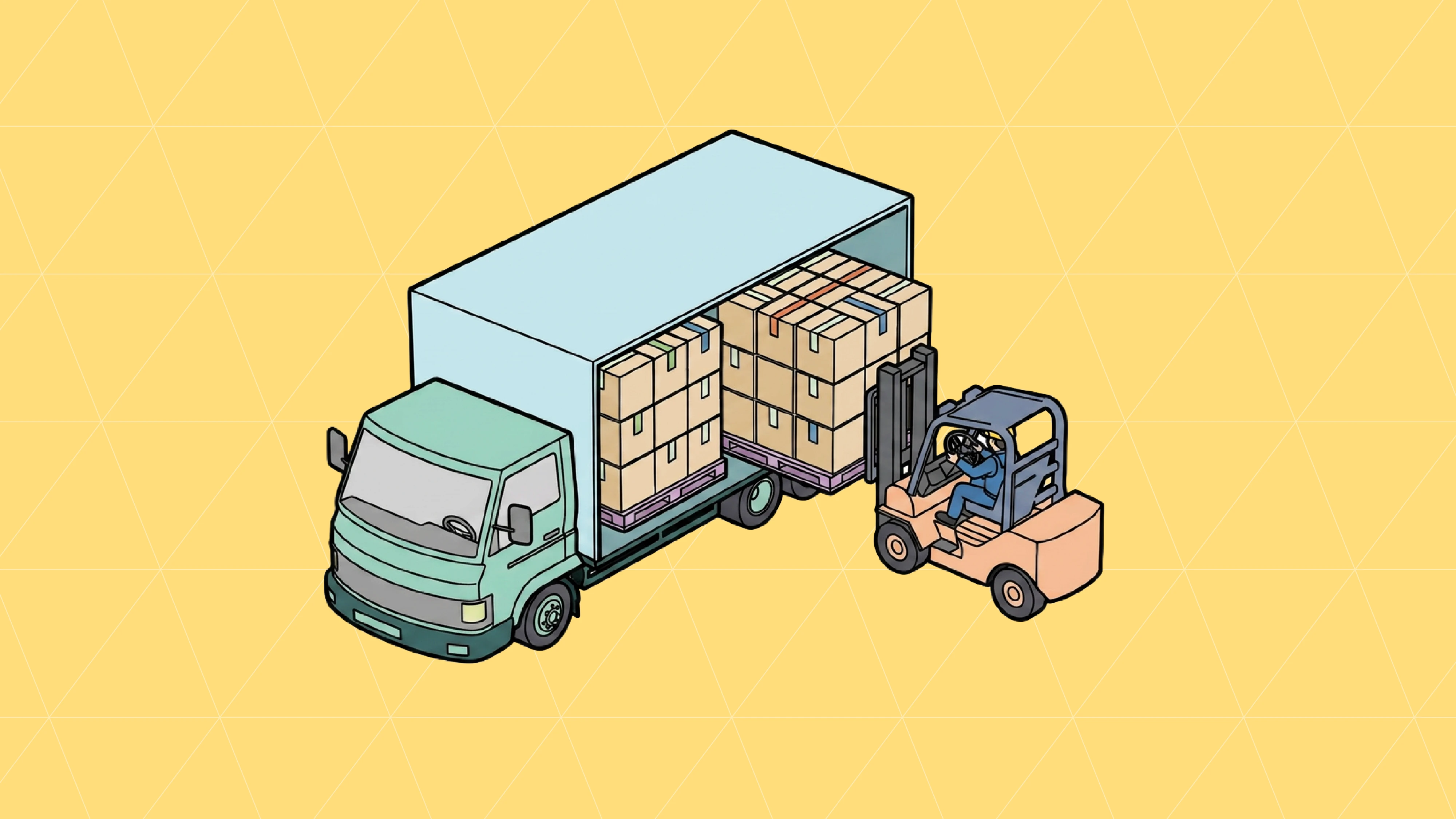
The trailer arrives. The lumper scans the first pallet. The SSCC won't read, so the crew counts cartons manually and reconciles against the BOL. That's 20 to 30 extra minutes of labor.
The two tall pallets get rebuilt to spec. More labor, more time.
The receiving system flags an ASN exception because the physical count doesn't match what you sent. The DC routes the load to manual receive.
The supplier compliance system logs the failures: ASN inaccuracy, label scan failure, palletization out of spec.
You now have:
A lumper invoice that is $150 higher than a clean load of the same product to the same DC.
A retailer chargeback for ASN inaccuracy at $250.
A chargeback for non-compliant labeling at $100.
A chargeback for out-of-spec palletization at $75.
Total damage on a single trailer: $575 on top of normal freight cost. Multiply by 200 loads a quarter at a 15 percent defect rate and you are at $172,500 a year. Most of that is recoverable, none of it is recovered, because no single team sees the full bill.
The shared root cause
Every example above traces back to one of three operational gaps:
ASN accuracy. Your EDI 856 has to match the physical load. Carton counts, SSCC barcodes, pallet structure, GTIN data, ship-from, ship-to, all of it. Most ASN errors are not data entry mistakes. They come from a disconnect between the warehouse management system that picks the load and the EDI system that builds the 856.
Label quality and placement. SSCC labels on GS1-128 stock, in the right position on the carton or pallet, with verified scan rates before the trailer closes. Cheap labels, wrong placement, or skipped verification all generate label scan failures, which trigger manual receiving, which feeds both lumper time and label chargebacks.
Palletization to retailer spec. Each retailer publishes pallet specs in their supplier manual. Heights, tier patterns, mixed-SKU rules, slip sheet allowances. A pallet that doesn't meet spec gets rebuilt at the DC, billed by the lumper, and flagged by compliance.
Fix any one and you reduce both lumper variance and chargeback frequency. Fix all three and the line items go close to zero.
Why the supplier finance view obscures this
Most supplier accounting setups make it hard to see the connection. Lumper fees show up in freight. Chargebacks show up in deductions. Compliance penalties might be split across SKUs by allocation rules that look reasonable but mask the per-shipment story.
The way to surface it is to pull a single quarter of data and join three sources:
Lumper receipt or carrier freight invoice with PO number.
Retailer deductions and chargebacks with PO number and code.
Your own ASN log with PO number and validation status.
Group by PO. Look at the POs with chargebacks. Match them to the lumper line items. The pattern shows up inside ten minutes. POs that generate compliance penalties almost always carry higher-than-average lumper costs.
Most suppliers have never done this exercise. The first one to do it in a category typically finds 6 to 12 percent of POs are responsible for 40 to 60 percent of combined lumper plus chargeback spend.
The four-step fix
This is the operational program that pays for itself.
1. Set up an ASN validation gate
Every ASN your system generates should pass through a validation gate before it transmits. The gate checks: carton count matches WMS pick, SSCC barcodes match physical labels, GTINs match the PO, pallet structure matches the BOL, ship dates are within window. A failed ASN doesn't transmit; it goes back to the warehouse for correction.
If you are running a modern EDI platform this is configurable. If you are on legacy software or a translator without business logic, this is the upgrade. Our EDI integration platform overview covers what to look for.
2. Verify SSCC scan rates before the trailer leaves
Build scan verification into the loading process. Each SSCC label gets scanned at least once before it goes on the trailer. A label that fails scans gets replaced. Track the failure rate by line, by label printer, by warehouse. Below 1 percent is achievable. Above 3 percent is a printer or stock issue.
3. Build a retailer-specific palletization SOP
Pull each retailer's supplier manual. Document the pallet spec on a single page. Train the warehouse floor. Audit a sample of pallets every shift. The labor cost of audit is fractions of a cent per case; the savings on rebuild fees and chargebacks is dollars.
4. Run a monthly joint review
Stand up a 30-minute monthly meeting with logistics, EDI, warehouse ops, and accounting. The agenda: top 10 POs by combined lumper plus chargeback cost. What went wrong. What fix prevents the next one.
The meeting is the system. Without it, the work above slips and the line items drift back up.
What good looks like
A supplier running this program has:
Sub-1 percent ASN error rates by retailer.
99 percent first-scan rate on SSCC.
OTIF performance at or above the Walmart 98 percent threshold for Collect and 90 percent for Prepaid.
Documented retailer pallet specs and a sampled compliance audit.
A monthly joint review with logistics, EDI, warehouse, and finance.
The math is worth running on OTIF alone. Walmart fines suppliers 3 percent of cost of goods on every case that misses On-Time In-Full, scored at the line level on each PO (Walmart On-Time In-Full requirements). A supplier doing $50M in Walmart cost of goods with a 95 percent OTIF score is paying roughly $75,000 a month, or $900,000 a year, in OTIF fines alone, before lumper variance or ASN chargebacks. Closing the gap from 95 to 98 percent on the same volume cuts that to under $300,000. The three operational moves above (clean ASN, scanning SSCC, palletization to spec) are the same moves that lift OTIF, because the same defects drive both penalty types.
FAQ
Are lumper fees considered chargebacks? No. A lumper fee is a service charge for unloading labor. A chargeback is a non-compliance penalty assessed by the retailer.
Can a single shipment defect cause both a lumper surcharge and a chargeback? Yes, and that is the most common pattern. An ASN error, a bad SSCC label, or out-of-spec palletization triggers manual handling (lumper surcharge) and a compliance code (chargeback) on the same load.
Which retailers have the most expensive chargeback programs? Walmart OTIF, Target vendor scorecard, Amazon Vendor Compliance, and Costco are the largest in dollar terms. UNFI, Kroger, and Albertsons run programs sized to their volume.
Are vendor compliance chargebacks disputable? Yes, within each retailer's dispute window and via their portal, with the documentation they specify. ASN data, BOL, label photos, and POD are the most commonly required evidence.
What is the single highest-ROI fix? ASN accuracy. A clean 856 with correct SSCC barcodes touches every other failure mode and is the upstream document for label, count, and pallet compliance.
More articles
Our platform is designed to empower businesses of all sizes to work smarter and achieve their goals with confidence.