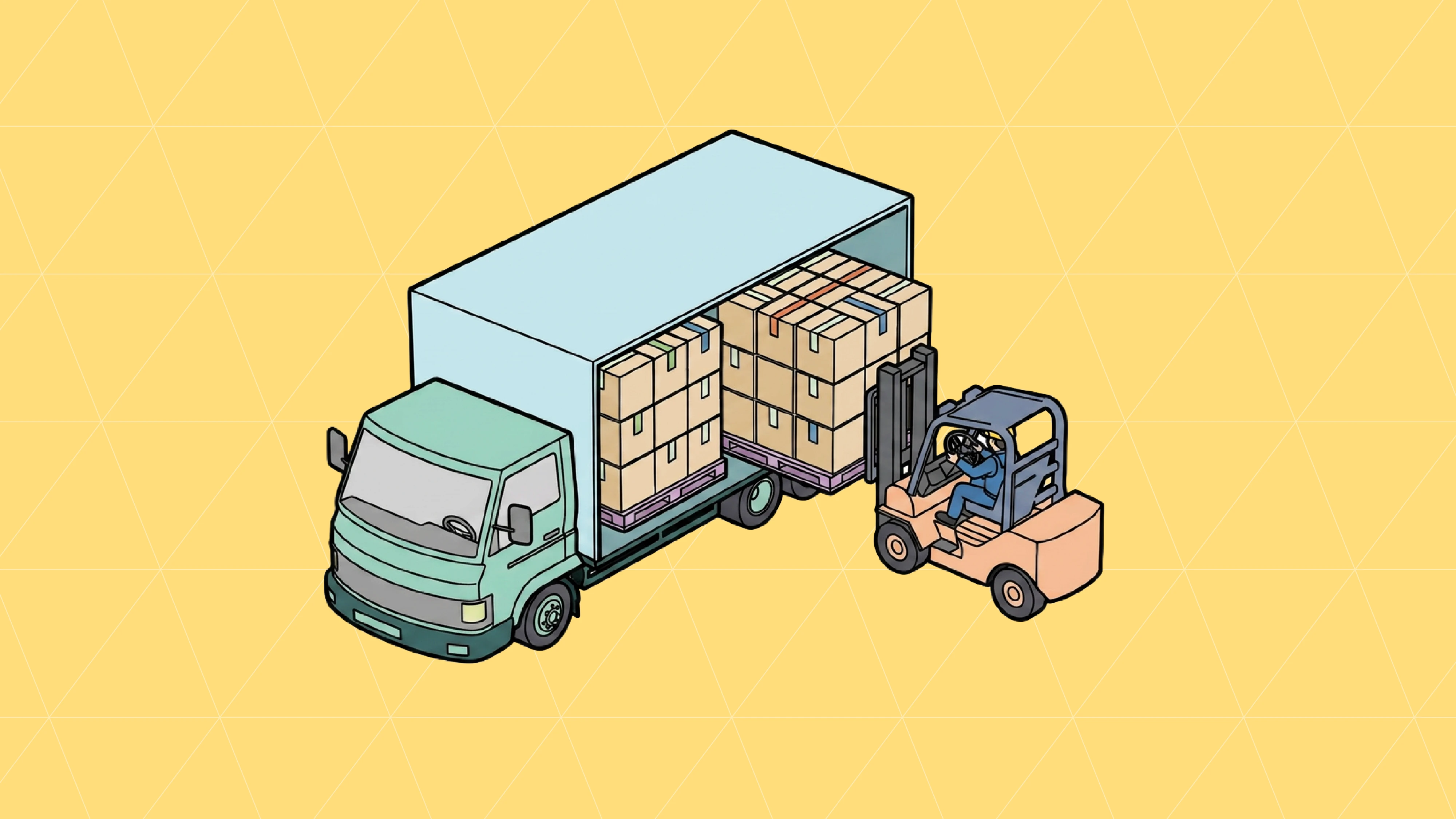
If you ship to a grocery DC, a lumper fee shows up one of two ways: your carrier passes it through on the freight invoice, or the retailer takes it straight off your remittance as a deduction. Either way, you pay. Most supplier-side coverage of lumper fees stops at "what is a lumper," which doesn't help you when $50 line items keep landing in your AR. This guide picks up where those posts stop: what the fees actually cost at Walmart, UNFI, and Kroger, when they are disputable, and the operational moves that cut them down.
What a lumper fee is, in supplier terms
A lumper is a third-party crew that unloads trailers at a retailer or grocery distribution center. The lumper fee covers their labor. Lumpers exist because grocery DCs see enormous, time-sensitive inbound volume, often refrigerated or frozen, and prefer trained third-party crews to in-house labor. That model saves the retailer money on payroll, workers' comp, and insurance. The cost is passed downstream, which is where you, the supplier, come in.
Three things are useful to know up front:
The driver almost never absorbs the fee. The carrier or broker reimburses the driver, then bills the shipper or supplier.
On Collect freight (where the retailer arranges pickup) the retailer often takes the lumper fee as an AR deduction rather than invoicing it.
The lumper receipt is the entire dispute record. No receipt, no recourse.
What lumper fees actually cost in 2026
The industry-wide range is $50 to $500 per load, with $150 to $400 typical and roughly $300 average. The spread is wide because the fee depends on six variables: load type (floor-loaded vs. palletized), temperature (dry vs. refrigerated vs. frozen), pallet count, weight, time of day, and any extra handling like pallet rebuilds or split picks.
Floor-loaded grocery shipments average around $300. Palletized loads run $100 to $250. Frozen and refrigerated handling carries a premium. Midwest grocery DCs tend to run higher than Southeast facilities.
Three benchmarks worth keeping in mind:
Walmart. Flat $50 per PO on most loads, billed as an AR deduction on Collect freight. Sometimes invoiced in bulk, which is why suppliers occasionally see them appear and disappear in remittance cycles. The fee is disclosed only in supplier agreement fine print, which is why it surprises so many brands the first time it lands.
UNFI. Lumper-style charges show up in two places: as fees for breakdown and fingerprinting on inbound freight, and as deductions on the supplier remittance. UNFI pays invoices net of deductions and chargebacks per the Supplier Policies and Guidelines, and disputes have a 30 to 60 day window through the UNFI Supplier Portal.
Kroger, Albertsons, Publix, Safeway. Lumper services are standard at virtually every grocery DC. Fees are typically passed through carrier invoicing on Prepaid freight, with rates set by the lumper service contract at each facility.
Can you dispute a lumper fee?
Sometimes, but the odds are stacked against the supplier.
Flat-fee deductions inside the four corners of your supplier agreement are almost never disputable. Walmart's $50 per PO falls into this category. The narrow openings are:
Duplicate fees on a single PO (a flat-fee retailer should not bill the same PO twice).
Lumper fees applied to POs where the supplier agreement does not authorize them.
UNFI deductions where the freight terms, ASN, BOL, or proof of delivery contradict the deduction reason. Filed within the dispute window with the deduction reference number, BOL, carrier confirmation, ASN data, and label photos when relevant.
Carrier-billed lumper fees are easier to dispute because the receipt is the source of truth. If the receipt is missing fields (facility name, date and time, load reference, services performed, pallet count, total, payment method, lumper company, driver signature, facility stamp) or the fee exceeds a cap in the rate confirmation, the carrier eats it. That works in your favor if your contract with the carrier caps reimbursement.
The structural fix is upstream: get the supplier agreement amended so the retailer cannot pass the lumper fee through on your freight terms. That depends on volume, leverage, and category, and is worth raising in the next annual review even if the answer this year is no.
Why your lumper fee variance is bigger than your peers'
Two suppliers shipping the same product to the same DC can see very different lumper bills. The difference comes down to how the trailer presents at the dock. Lumpers charge for time and complexity. Anything that adds labor adds dollars.
The drivers of high variance:
Floor-loaded vs. palletized. Floor loads require building pallets at the dock, which is the most expensive.
Mixed SKU pallets without clean tier or layer breaks.
Pallets over the height cap, which forces rebuilds.
Missing or incorrect SSCC labels, which force manual count-and-verify.
ASN data that does not match the physical load, which forces exception handling.
Carton stack quality, which determines whether the lumper can run a single pallet through or has to restack.
If your lumper line items vary by 2x or 3x between similar shipments, the issue is almost always in this list.
Four operational moves that cut lumper fees
These are the moves that move the number. None of them is novel; what is novel is treating them as a single program rather than four separate initiatives.
1. Clean, accurate ASNs that match the physical trailer
The EDI 856 ASN is the linkage between your data and the physical labels on the cartons. The SSCC-18 in the MAN segment of each pack-level HL loop must match the barcode on the physical carton. When that match is clean, the lumper scans pallets and matches the receipt to the ASN data in seconds. When it isn't, the crew opens cartons, manually counts, and bills the time.
If you are not yet on EDI with your retailer DCs, or your ASN error rate is north of 2 percent, that is the first lever. See our EDI 856 ASN guide and our overview of EDI in logistics for the document set that automates receiving.
2. Palletize to spec, every time
Standardize pallet height to the retailer's cap. Use consistent cartons. Add corner boards on tall pallets. Avoid mixed-SKU pallets where a single-SKU pallet would meet the order. Each of these reduces the labor minutes per pallet, and lumper services price by labor.
Pallet rebuilds and "extra pallet equivalents" are two of the most common surcharges on a lumper receipt. Hitting spec eliminates both.
3. SSCC labels that scan the first time
The SSCC label is what lets the receiving DC bypass manual count. Print on the right label stock, in the right position, with the right format, and verify scans before the trailer leaves. A label that does not scan triggers a manual process, which triggers a lumper surcharge.
4. A lumper receipt review process
Every lumper receipt that hits AP should be reviewed against the rate confirmation cap and the supplier agreement. The fields that decide a dispute are facility name, date and time, load reference, services performed, pallet count, total, payment method, lumper company, driver signature, and facility stamp. Build that into your AP workflow. Most suppliers do not, and write off five-figure annual losses that a 10-minute review would catch.
Lumper fees vs chargebacks: what is the difference
These get conflated and they should not be.
A lumper fee is a service charge for the labor to unload the trailer. It is reimbursable under most carrier contracts and disputable when undocumented.
A chargeback is a financial penalty for non-compliance with the retailer's vendor compliance program. ASN errors, late shipments, wrong labels, missing data, and pack-to-PO mismatches generate chargebacks under codes specific to each retailer.
The connection: the same operational failures that generate chargebacks also drive lumper surcharges. A bad ASN gets you both a compliance chargeback from the retailer and a higher lumper bill on the same load. Fixing the upstream document quality solves both. See our consumer goods EDI guide for how compliance, EDI, and ERP integration work together.
What good looks like
A supplier with lumper fees under control has:
Lumper line items that vary by less than 25 percent across similar shipments.
Clean ASNs with sub-1 percent error rates.
SSCC labels that scan for the first pass, 99%
A monthly review of lumper deductions against supplier agreement terms, with a documented dispute queue for the cases worth fighting.
Annual supplier agreement reviews that include freight terms and pass-through fees.
If you are missing any of those, that is the project plan.
FAQ
Who pays the lumper fee? The driver pays on-site, the carrier or broker reimburses the driver, then the shipper or supplier absorbs it via the freight invoice or AR deduction. On Walmart Collect freight, the retailer takes it straight off the remittance.
What is a lumper receipt? A paper or digital record of payment with date, time, facility, load reference, services, pallet count, total, payment method, and signatures. It is the only document that supports a dispute.
Are lumper fees standard at every DC? At grocery DCs, effectively yes. At general merchandise and apparel DCs, less common.
Can I refuse to pay a lumper fee? On Walmart Collect freight, no, the deduction posts automatically. On prepaid freight, your carrier contract determines what is reimbursable and what is not.
How much do lumper fees cost? $50 flat at Walmart per PO. $100 to $250 for typical palletized grocery loads. $300 average for floor-loaded grocery. Up to $500 for complex, refrigerated, or high-pallet-count loads.
Do EDI and clean ASNs really lower lumper fees? Yes, indirectly. Clean ASN data plus correct SSCC labels eliminate manual count-and-verify, which is the labor lumpers bill for. Suppliers who run sub-1 percent ASN error rates pay materially less in lumper surcharges and chargebacks combined.
Next steps
Pull your last six months of lumper deductions. Sort by DC and load type. If a single DC accounts for more than 30 percent of your lumper spend, that is where the EDI, palletization, and label work pays back fastest. Talk to your EDI team or look at our EDI integration platform overview if you need a starting point.
More articles
Our platform is designed to empower businesses of all sizes to work smarter and achieve their goals with confidence.