Why contract pricing creates chargebacks
If you sell through distributors, you probably have customers who buy your product from the distributor at a price you negotiated directly with them. A hospital system, a contractor, a buying group. The distributor bought the product from you at its normal cost, sold it to that customer at the lower contract price, and now wants you to cover the difference.
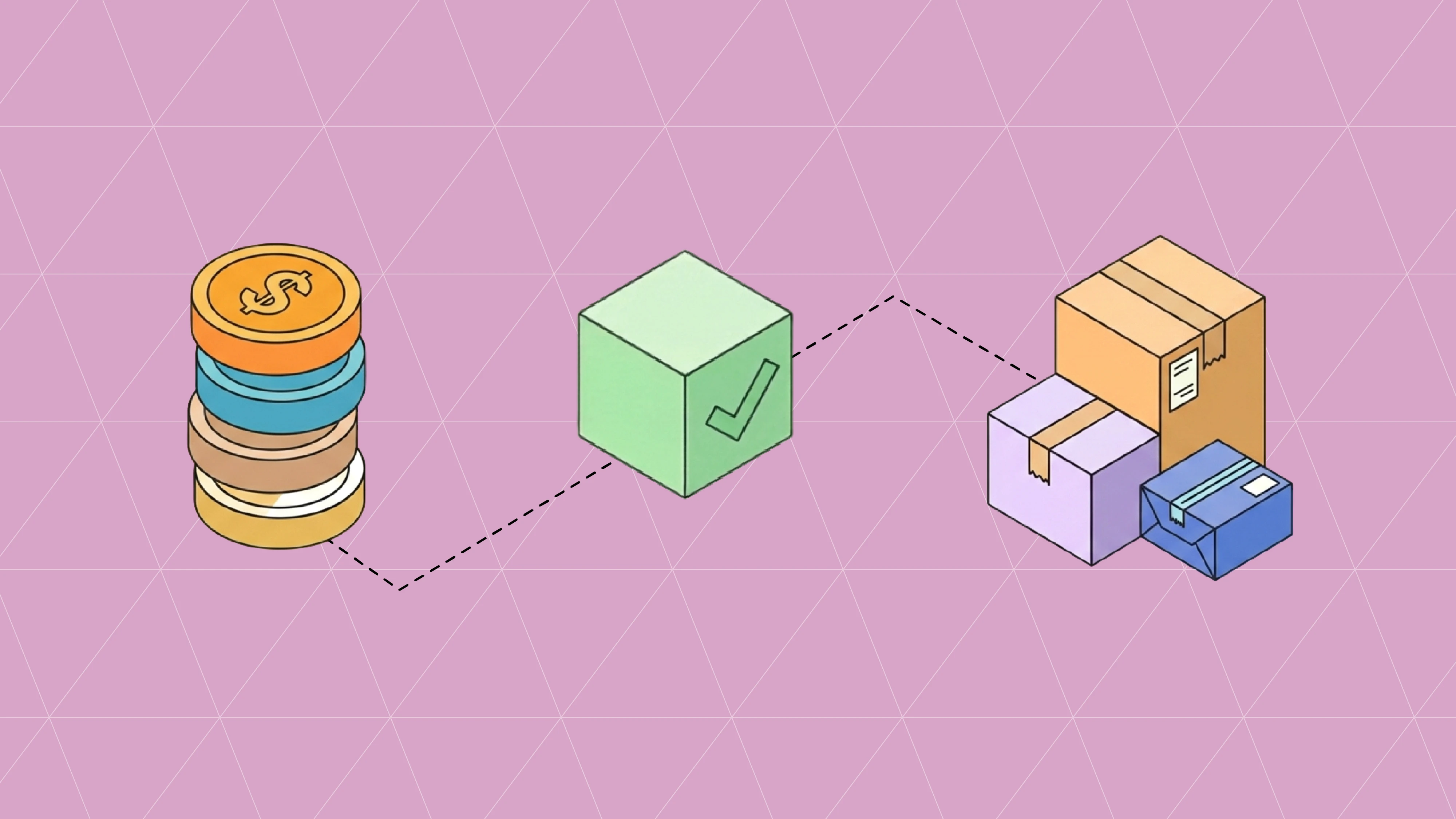
That difference is a distributor chargeback, and three EDI documents handle it: the 845 sets up the contract price, the 844 claims the money, and the 849 answers the claim. In healthcare and pharmaceutical distribution, and in electrical and industrial supply, this loop can run thousands of lines a week. When it works, credits post on schedule. When the data drifts, you end up with denied claims, short payments, and a reconciliation backlog that nobody owns.
This guide explains each document, walks through the full loop with a dollar example, and covers where claims usually go wrong.
The three documents and who sends each
Document | Name | Sender to receiver | What it does |
|---|---|---|---|
Price Authorization Acknowledgment/Status | Manufacturer to distributor | Tells the distributor which customers are eligible for a contract, the contract price per item, and the start and end dates | |
Product Transfer Account Adjustment | Distributor to manufacturer | Claims a credit for units sold to eligible customers below the distributor's cost, line by line | |
Response to Product Transfer Account Adjustment | Manufacturer to distributor | Accepts, adjusts, or denies each claim line, with a reason code |
Two related documents often sit alongside them. The 867 Product Transfer and Resale Report reports what the distributor sold and to whom, which some manufacturers use to validate claims or track sales. And each document is acknowledged with a 997, which only confirms receipt.
The 845 is the one most teams underrate. Every 844 line is checked against the contract terms the distributor received, so a contract that never loaded, or loaded late, produces claims the manufacturer will deny.
How the 845, 844, and 849 flow works end to end
Manufacturer sends the 845. You award a contract to a customer, and the 845 tells the distributor who the customer is, which items are covered, the contract price, and the effective dates.
Distributor buys at its normal cost. The distributor places 850 purchase orders with you and pays your standard distributor price. The industry often calls this the acquisition or wholesale cost.
Distributor sells at the contract price. When the eligible customer orders, the distributor bills them the lower contract price from the 845.
Distributor sends the 844. On a set schedule, often weekly or monthly, the distributor claims the gap between its cost and the contract price for every eligible unit sold.
Manufacturer validates the claim. Your team or your contract system checks each line: was the customer eligible on that date, was the price right, is the quantity plausible, has the line been claimed before?
Manufacturer sends the 849. Each line comes back accepted, adjusted to a different amount, or denied with a reason.
Credit is issued and posted. You issue the credit, often as a credit memo or an 812 credit/debit adjustment, and the distributor applies it against what it owes you, frequently alongside an 820 remittance.
The cycle repeats every time a contract changes. A price change, a new member added to a buying group, or an expiring contract all start with a fresh 845.
A worked example in dollars
Say you make a surgical glove that distributors buy from you at $50 a case. You sign a contract with a regional hospital system at $42 a case, effective March 1 through August 31, and send the 845.
Across late August and early September, the distributor sells 100 cases to the hospital system at $42 and claims the $8 difference on each case in its 844. That claim is $800.
You check it against the contract. Eighty cases shipped on August 28, inside the contract window. Twenty shipped on September 3, after the contract ended. Your 849 comes back like this:
Claim line | Cases | Claimed | Disposition | Approved | Reason |
|---|---|---|---|---|---|
Ship date Aug 28 | 80 | $640 | Accepted | $640 | |
Ship date Sep 3 | 20 | $160 | Denied | $0 | Contract expired before ship date |
Total | 100 | $800 | $640 |
You issue a $640 credit. If the distributor posts the full $800 it claimed, its books now show you owing $160 you don't owe. Multiply that by hundreds of lines a month and you have the open-balance disputes that eat finance team time.
The fix here sits upstream. Either the contract should have been extended with a new 845 before it lapsed, or the distributor's system should have stopped billing the contract price after August 31. Both are data problems, which is why the 845 deserves as much attention as the claims themselves. You can track the dollar impact over time with our net chargeback calculator.
Where chargeback claims break and how to fix them
Most denied or adjusted lines come from a handful of causes. Each one is cheaper to prevent than to dispute.
Problem | What happens | Prevention |
|---|---|---|
845 sent late or never loaded | Distributor bills a price it can't support, then the claim is denied | Send 845s before the effective date and confirm the distributor loaded them, not only that the 997 came back |
Customer eligibility mismatch | Customer IDs in the claim don't match the contract membership list | Agree on one identifier per end customer, such as a GLN, DEA, or HIN in healthcare, and send membership changes promptly |
Unit of measure mismatch | Contract priced per box, claim submitted per case, or the reverse | Fix the UOM in both the 845 and your item data; our EDI 832 guide covers item setup |
Stale acquisition cost | Your list price changed and the distributor claims against the old cost | Communicate cost changes with effective dates and keep them in sync with the 845 |
Duplicate claims | The same sale is claimed twice across two 844 files | Check for duplicates on invoice number and line before validating |
Adjusted lines posted wrong | Distributor posts the claimed amount instead of the approved amount from the 849 | Send clear reason codes on every adjusted line and reconcile open balances monthly |
Late claims | Claims arrive after the window in your distribution agreement | State the window in the agreement and apply it consistently |
One habit that helps: measure how long disputed lines stay open. Our dispute resolution calculator gives you a simple way to track it, and our guide to supplier collaboration covers the working relationship side.
Connecting chargebacks to your payment documents and ERP
The 849 settles what you owe on a claim. The money then moves through your normal receivables documents, and that's where chargebacks need to reconcile with everything else.
The 812 Credit/Debit Adjustment can carry the credit itself when your partner supports it.
The 820 Payment Order/Remittance Advice shows which invoices a payment covers and which credits were taken against them. Our 820 guide explains how to read it.
The 823 Lockbox comes from your bank and reports deposits received, which your cash application team matches to the 820.
In your ERP, keep contract prices, chargeback claims, and approved credits as linked records. When they live in separate spreadsheets, finance can see that a payment came in short but can't easily trace it back to a specific 849 line. If your current setup can't connect those records, read our EDI ERP integration guide and the ERP readiness checklist.
Our trading partner directory covers distributors in these channels, including McKesson, Cardinal Health, Owens & Minor, Wesco, and HD Supply. If you're setting up a new contract program, start integrating and we'll map it with you.
EDI 844, 845, and 849 FAQ
What is an EDI 844?
The 844 Product Transfer Account Adjustment is a distributor's chargeback claim to a manufacturer. It requests a credit for units sold to contract customers at a price below the distributor's cost.
What is an EDI 845?
The 845 Price Authorization Acknowledgment/Status is sent by the manufacturer to set up or change contract pricing. It lists eligible customers, covered items, contract prices, and effective dates.
What is an EDI 849?
The 849 Response to Product Transfer Account Adjustment is the manufacturer's answer to an 844. It accepts, adjusts, or denies each claim line with a reason.
Is a distributor chargeback the same as a retail compliance chargeback?
They share a name and work differently. A distributor chargeback is a contract price reimbursement you agreed to. A retail compliance chargeback is a penalty for missing a requirement such as a late ASN or a labeling error. Our post on lumper fees and compliance chargebacks covers the retail kind.
Which industries use the 844 and 849?
Healthcare and pharmaceutical distribution use them most. They also show up in electrical and industrial distribution, and anywhere manufacturers set contract prices for end customers who buy through a distributor.
How does the 867 relate to the 844?
The 867 reports what the distributor sold and to whom. Some manufacturers use it to check 844 claims against actual sales or to pay rebates and track channel sales.
What happens if a chargeback line is denied?
The distributor gets the denial and reason code on the 849. It can correct and resubmit the line if the data was wrong, or take up a dispute if it believes the claim was valid. Both sides should post the approved amount, not the claimed amount, to avoid open-balance gaps.
More articles
Our platform is designed to empower businesses of all sizes to work smarter and achieve their goals with confidence.